

STRENGTHENING WITH CFRP CARBON PLATE
Deformations, cracks, and capacity deficiencies that occur over time in the structural systems of buildings create a need for strengthening, especially in floor and beam areas. At this point, Carbon Fiber Reinforced Polymer (CFRP) plates are preferred as one of the most effective strengthening techniques due to their high strength and minimal cross-sectional increase requirements.
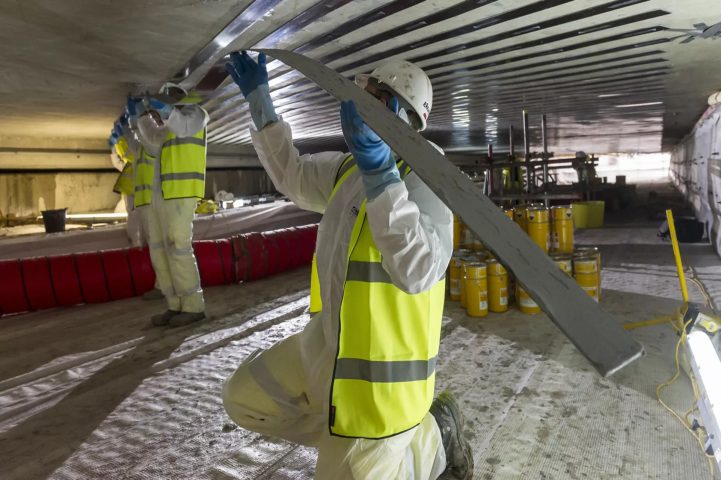
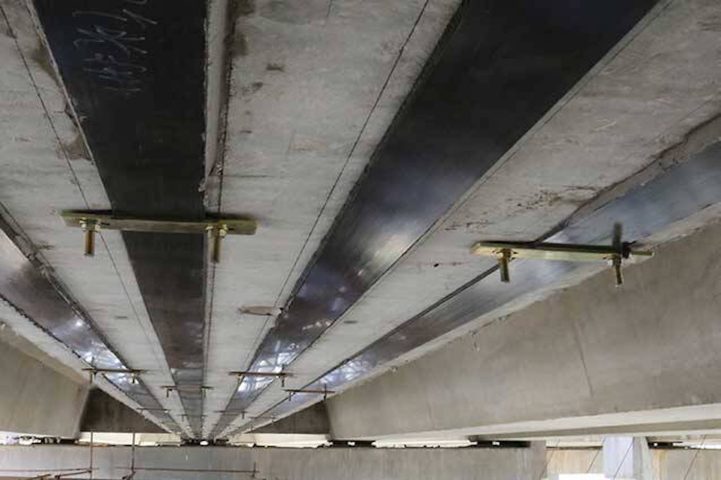
CFRP carbon plates can be applied according to specific demands of the structure, being produced in various thicknesses and widths. Generally used on ceilings, under beams, and in all reinforced concrete elements where bending capacity needs to be increased, their lightweight structure ensures they do not create an additional load on the existing building, and applications are completed in a short time.
The strengthening process begins with the preparation of the concrete surface and the necessary corrections to the structural element. The concrete surface is roughened, necessary repair mortars are applied, and then carbon plates are mounted onto the surface using high-performance epoxy adhesive. This system increases the bending strength of the element and ensures structural integrity becomes secure.
Lateral movements during an earthquake can cause higher-than-expected stresses in beams and floors. In such cases, the CFRP plate system prevents the progression of existing damage by increasing the load-bearing capacity and thwarts the formation of potential new cracks.
As in modern structures, CFRP plate application is preferred in renovation and strengthening projects. Thanks to its thin section that does not disturb the aesthetic appearance and its long-lasting performance, it can be safely used in both residential and commercial projects.